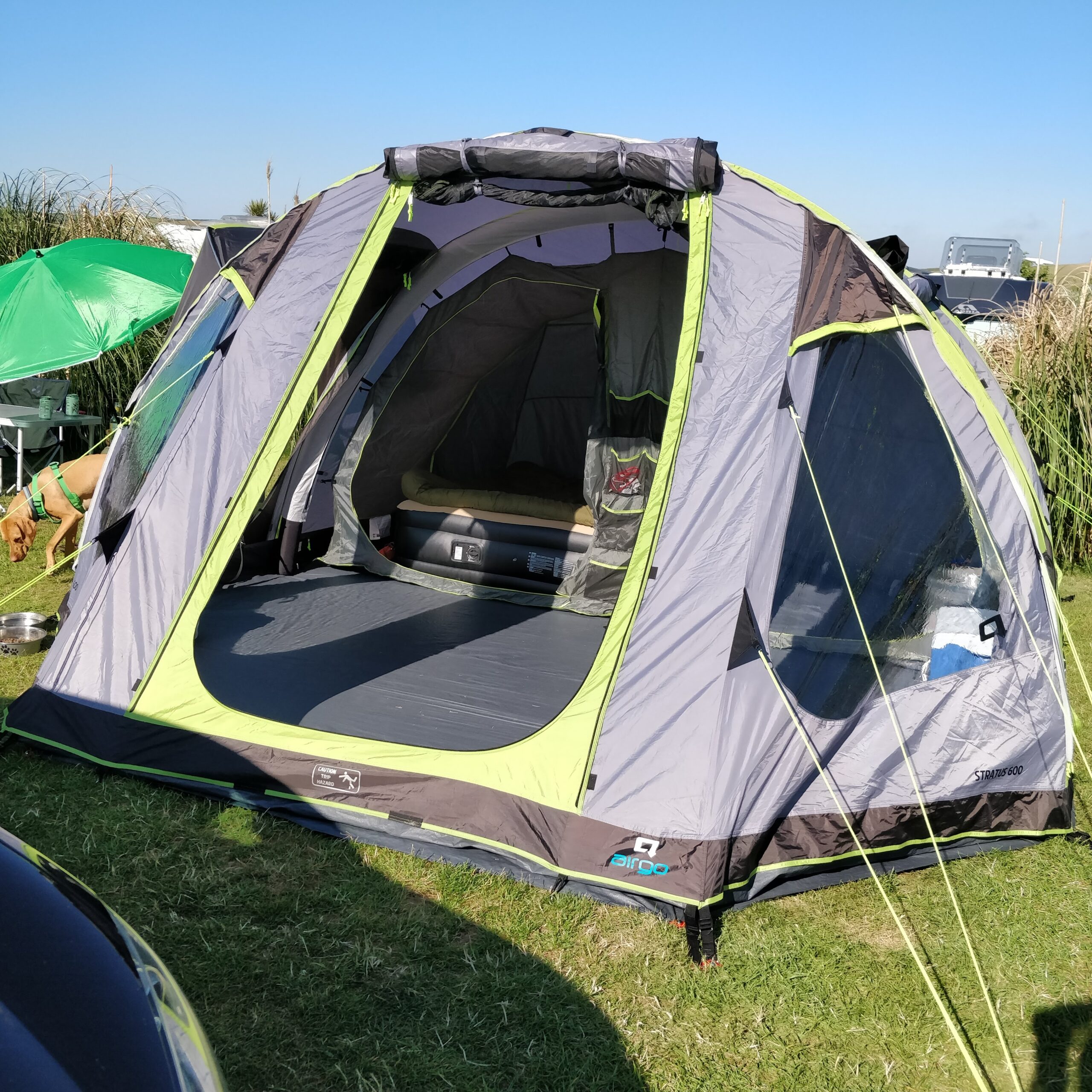
Walk onto any campsite in the UK this summer, and you will notice two things immediately. First, the smell of bacon is universal. Second, the landscape of the British campsite has changed forever. Where there used to be a sea of fibreglass poles and guy lines, there are now monolithic structures that look like they have been pumped up with a bicycle pump.
The air tent revolution is well and truly here. In fact, if you walk into a camping shop today, you might find it hard to even find a traditional large family tent on display. But are inflatable tents actually better than the trusty traditional pole tent we grew up with? Or are they just a heavy, expensive fad designed to part us from our cash?
At Campsters Paradise, we love camping, and we have spent years wrestling with both. We’ve snapped poles in the Lake District and pumped up air beams in Cornwall. So, if you are stuck deciding between a classic Vango Keswick 500 (poled) or splashing the cash on a fancy AirBeam model, this detailed guide is for you.
Here is the brutal, honest truth about air tents vs pole tents.
The Case for the Air Tent (The “Lazy” Option)
Let’s not beat around the bush: you buy an air tent for one dominant reason – convenience. If you have ever arrived at a campsite at 8pm in the rain and tried to thread a 6-metre fibreglass pole through a wet sleeve while your toddler screams that they need a wee, you will understand the appeal of air immediately.
The “Perfect Pitch” Factor
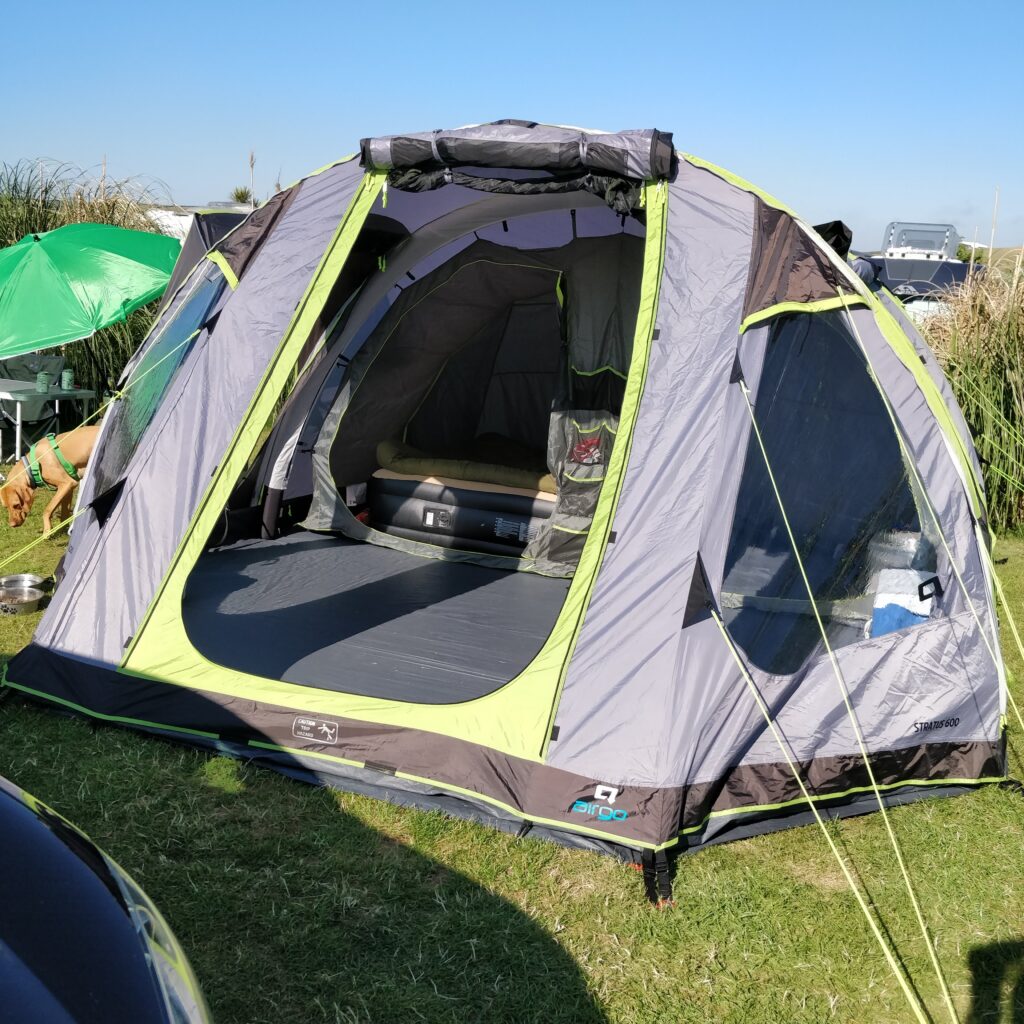
The biggest selling point is the speed and simplicity of the pitch. With a pole tent, you are assembling a structure. With an air tent, you are essentially inflating a balloon. One person can pitch a massive 6-man air tent while the other person manages the kids, the dog, and the stress levels. You peg the four corners, attach the manual or electric pump, and watch it rise. Within 10 minutes, the structure is up. That gives you more time for exploring, opening a drink, or just relaxing while your neighbours are still arguing over which pole goes where.
Wind Performance: The Physics of Air
People worry that air tents will pop or blow away. They won’t. In fact, in high wind, air beams are arguably safer and more durable than poles. Think about it: if a 50mph gale hits a rigid fibreglass or steel pole, the pole has to resist the force. If the force is too great, the pole snaps. When a pole snaps, it often rips the fabric of the flysheet, ruining your trip. If that same gale hits an air beam, the beam flexes. It bends with the wind, absorbing the energy, and then pops back up the second the gust passes. There is nothing to snap. We have slept through storms in air tents where the roof was practically touching our noses during gusts, only to bounce back upright instantly. It is noisy, but it is practically indestructible.
The “Pop” Myth
“But what if it punctures?” This is the most common question we get. The reality is that air beams are incredibly tough. They are usually encased in a thick protective sleeve, inside the tent fabric. You would have to stab it pretty hard with a knife to puncture it. And even if you do? Most modern air tents have “isolation valves.” If one beam goes down, the others stay up, so the tent doesn’t collapse on your head.
The Case for the Pole Tent (The “Purist” Option)
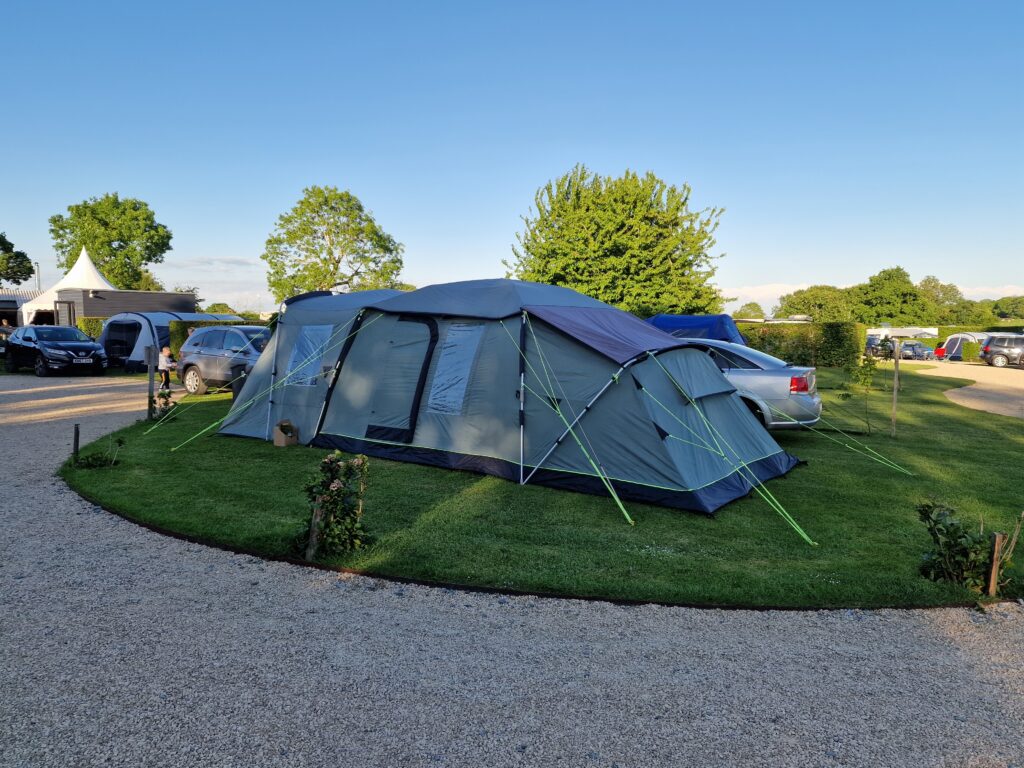
Don’t write off the humble pole tent just yet. There is a reason they have been around for decades, and for many experienced campers, they are still the superior choice. From dome tents to safari tents, there is a lot to like about the traditional way to put up a tent.
Value for Money
This is the big one. Air tents are expensive to manufacture. You can often buy a massive, high-spec pole tent for half the price of its inflatable equivalent. If you are planning a family holiday on a budget, poles win every time. You can get a huge amount of space – extra bedrooms, huge living areas – without needing to remortgage the house.
Pack Size and Weight
This is the hidden downside of air tents that nobody tells you about until you try to lift one. They are heavy. A large family air tent can easily weigh 30kg or 40kg because the heavy inflatable tubes are permanently attached to the fabric. A pole tent splits the weight. You carry the bag of fabric (maybe 15kg) and the bag of poles (10kg) separately. More importantly, pole tents pack down much smaller. Because you take the rigid poles out, the fabric can be squashed, squeezed, and compressed into tight spaces in your car boot. If you drive a hatchback or have a lot of stuff (bikes, prams, food), the massive, unyielding bulk of an air tent bag might physically not fit in your car.
The “Liveability” Factor
There is a subtle difference in the living space, too. Air beams need to be thick to support the tent – often 10cm or 15cm wide. This means the beams themselves intrude into the interior space slightly more than thin steel or fibreglass poles. Also, consider the structure. Steel pole tents are rigid. They are fantastic for hanging heavy lanterns, wet towels, or wardrobe organisers. Air beams can sag slightly under heavy weight, so you have to be more careful about what you hang from the ceiling.
Maintenance and Longevity
Which one will last longer?
- Pole Tents: These are easy to fix. If a pole snaps, you can buy a replacement section for £5 from any camping shop. You can fix it in the field with duct tape and a splint. However, over time, the elastic “shock cord” inside the poles will stretch and snap, needing re-threading.
- Air Tents: These require less day-to-day maintenance, but if a valve starts leaking after 5 years, finding a specific replacement part for an older model can be tricky. You also need to be careful not to “over-inflate” them on a hot day, as the air expands in the sun and can strain the seams (though most modern tents have pressure release valves to stop this).
In terms of the individual elements of these tents, like ground sheets, mesh, zips etc, there is no difference when it comes to durability.
Head-to-Head Comparison
Still on the fence? Here is the quick breakdown of the key differences:
| Feature | Air Tent 🌬️ | Pole Tent ⛺ | Winner |
| Setup Time | 10-15 mins | 25-45 mins | Air |
| Physical Effort | Low (Pumping) | High (Threading & Lifting) | Air |
| Weight | Heavy (single bag, 30kg+) | Lighter (split bags, 15-20kg) | Pole |
| Pack Size | Bulky & difficult to compress, take up more space in your boot | Compact & split-able | Pole |
| Cost | Expensive (£600 – £1,500+) | Affordable (£300 – £800) | Pole |
| Wind Stability | Flexes & bounces (Noisy but safe) | Rigid (Quiet but can snap) | Draw |
| Dog Friendly? | Yes | Yes | Draw |
The Verdict: Who Should Buy What?
Buy an Air Tent If…
- You camp with young children. With family camping, speed is a lifesaver. Being able to pitch solo means one parent is always free to keep the kids safe/entertained.
- You have a bad back. There is no hunching over, struggling to thread poles through sleeves, or lifting heavy steel frames above your head. You just stand there and pump.
- You are a nervous pitcher. If the idea of arriving at a campsite and everyone watching you struggle with poles fills you with dread, an air tent is your confidence boost.
- You want durability in wind. If you camp on the coast or in exposed spots, the “bounce back” ability of air beams provides incredible peace of mind.
Buy a Pole Tent If…
- You are on a budget. You can get a higher-spec tent (better waterproof rating, better fabric) for less money if you stick to poles.
- You have a small car. If boot space is tight, the ability to split the poles from the fabric is essential.
- You are camping with older kids/adults. If you have plenty of helpers to hold poles and lift frames, the pitching advantage of air tents disappears.
- You prefer a rigid structure. Some people just prefer the solid, non-bouncy feel of a steel-framed tent.
Final Thought
Whichever you choose, just remember: the best tent is the one you actually use. Whether it goes up with a pump or a pole, as long as it keeps the rain off your head and the midges out of your sleeping bag, you’re winning.
Don’t get too hung up on the “tech.” Focus on the layout, the space, and the camping adventure. Grab your camping equipment, book your campsites, and get out into the fresh air of the great outdoors.